
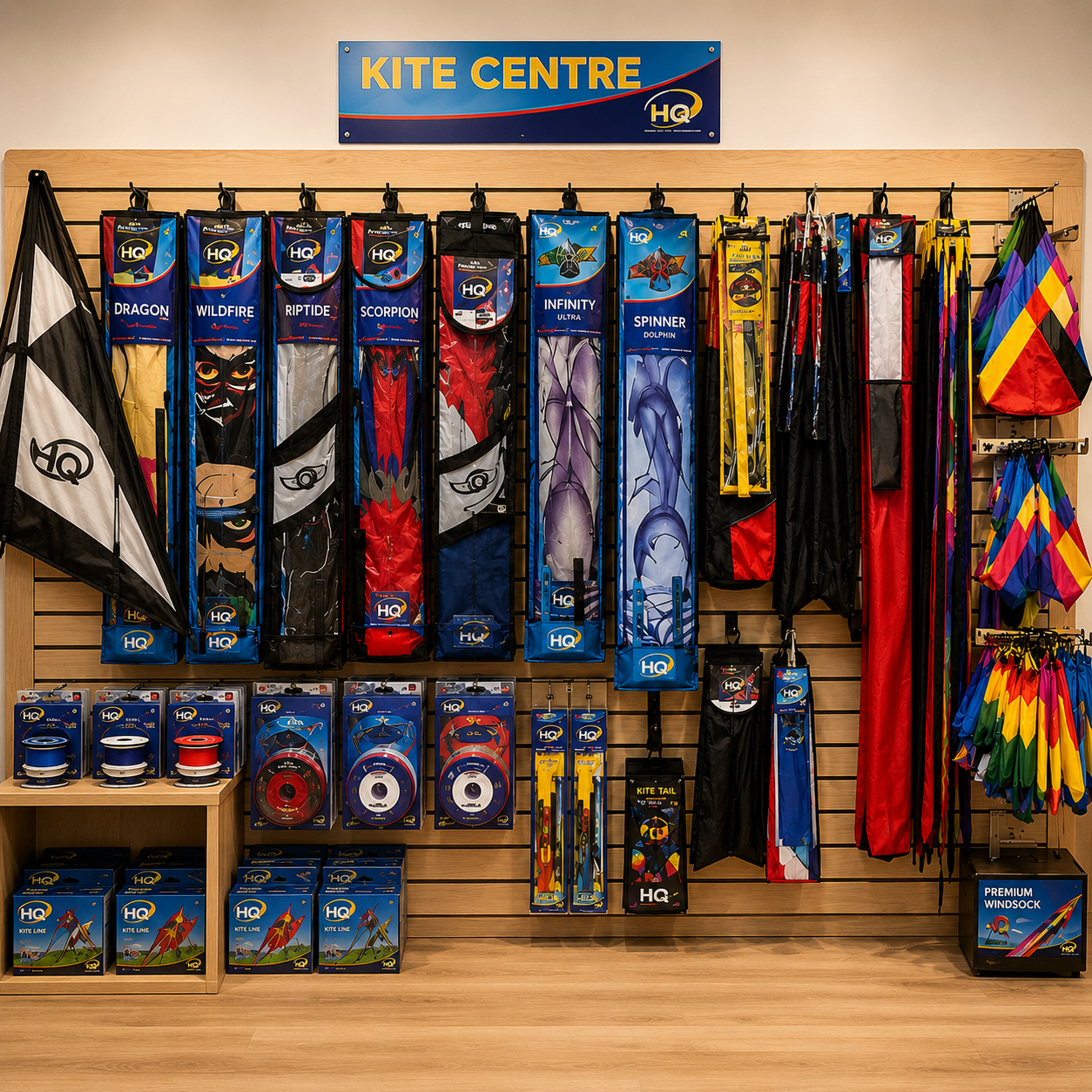
There is something timeless about watching a kite lift into the sky. Whether it’s a child flying their very first diamond kite at a local park or an experienced enthusiast piloting a large stunt kite along an open field, kite flying has a way of bringing people together while reminding us to slow down and enjoy the outdoors.
At Rocky Mountain Flag Company, we appreciate everything that encourages people to look up and enjoy the open sky. While flags and kites serve different purposes, they share many similarities. Both rely on the wind, both combine engineering with creativity, and both have been part of human history for centuries.
A Brief History of Kites
Kites are believed to have originated in China over 2,000 years ago. Early kites were used for much more than recreation. They played roles in military communication, scientific experiments, measuring distances, and even weather observation. As trade routes expanded, kites spread across Asia, Europe, and eventually the Americas, evolving into the colorful designs we recognize today.
Throughout history, kites have also contributed to major scientific discoveries. Benjamin Franklin’s famous electricity experiment involved a kite, helping demonstrate the relationship between lightning and electricity. Although the experiment is often simplified in history books, it highlights how these simple flying structures have helped expand our understanding of the world.
The Science Behind Flight
One of the reasons kites are so fascinating is that they demonstrate basic principles of aerodynamics in a way that’s easy to observe.
A kite stays airborne because four primary forces work together:
- Lift, created as wind flows over the kite.
- Drag, which resists forward motion.
- Weight, pulling the kite toward the ground.
- Tension from the flying line, allowing the pilot to control its position.
The balance between these forces determines how stable a kite flies. Even small adjustments to the bridle, tail, or flying angle can dramatically change its performance.
Choosing the Right Weather
The best kite-flying conditions usually involve steady winds rather than strong gusts. Light to moderate winds allow for smoother flights and make controlling the kite much easier.
Large open spaces away from trees, power lines, and buildings are ideal. Parks, open fields, beaches, and designated flying areas provide plenty of room while helping keep everyone safe.
Kites and Community Events
Many festivals across the country celebrate kite flying with incredible displays of color and creativity. Giant inflatable kites, precision stunt demonstrations, and family-friendly workshops attract thousands of visitors every year.
These events share something in common with community flag displays. They create memorable experiences that bring people together. Whether it’s a patriotic celebration, a town festival, or a weekend gathering at the park, seeing colorful objects dancing in the wind naturally captures attention and creates lasting memories.
The Connection Between Flags and Kites
Although flags and kites serve different purposes, they depend on many of the same principles.
Both require durable materials capable of standing up to sunlight and changing weather conditions. Quality stitching, reinforced edges, lightweight fabrics, and careful construction all contribute to better performance and longer life.
Understanding how wind behaves is also essential. The same knowledge that helps position a flagpole for maximum visibility can help determine the best location for flying a kite safely and successfully.
For those who enjoy spending time outdoors, it’s easy to appreciate both. A well-maintained flag proudly represents a home, business, school, or community, while a kite turns an ordinary afternoon into an unforgettable experience.
Different Types of Kites
Modern kites come in countless styles, each offering a unique flying experience.
Single-line kites remain the most popular choice for families thanks to their simplicity and stability.
Delta kites provide excellent lift in lighter winds and are known for their wide wingspan.
Box kites offer impressive stability and can remain airborne for extended periods.
Sport and stunt kites feature two or four control lines, allowing pilots to perform loops, dives, spins, and synchronized routines.
Large display kites can reach enormous sizes, often taking the shape of sea creatures, birds, dragons, or other imaginative designs that become centerpieces at festivals.
Tips for New Kite Flyers
If you’re just getting started, a few simple guidelines can make the experience much more enjoyable.
Choose a beginner-friendly kite that’s appropriate for your local wind conditions.
Always inspect your flying line before use.
Avoid flying near roads, airports, power lines, or during thunderstorms.
Be patient as you learn how different wind conditions affect flight.
Most importantly, enjoy the experience rather than focusing on perfect performance. Every day brings slightly different winds, making each flight unique.
Celebrating the Wind
Whether it’s a beautifully crafted flag waving outside a business or a colorful kite soaring high above a local park, there’s something inspiring about seeing the wind come to life.
Both remind us that simple designs, built with care and quality, can create lasting impressions. They encourage us to spend more time outdoors, connect with our communities, and appreciate the natural forces that surround us every day.
At Rocky Mountain Flag Company, we’ve spent decades helping customers make the most of the spaces where the wind tells a story. From residential flagpoles to commercial installations, custom flags, banners, and outdoor displays, we’re proud to support the traditions that make our communities more vibrant.
So the next time you see a kite dancing across a blue sky, take a moment to appreciate the craftsmanship, science, and simple joy behind it. After all, sometimes the best way to enjoy the wind is simply to let it lift something beautiful.